
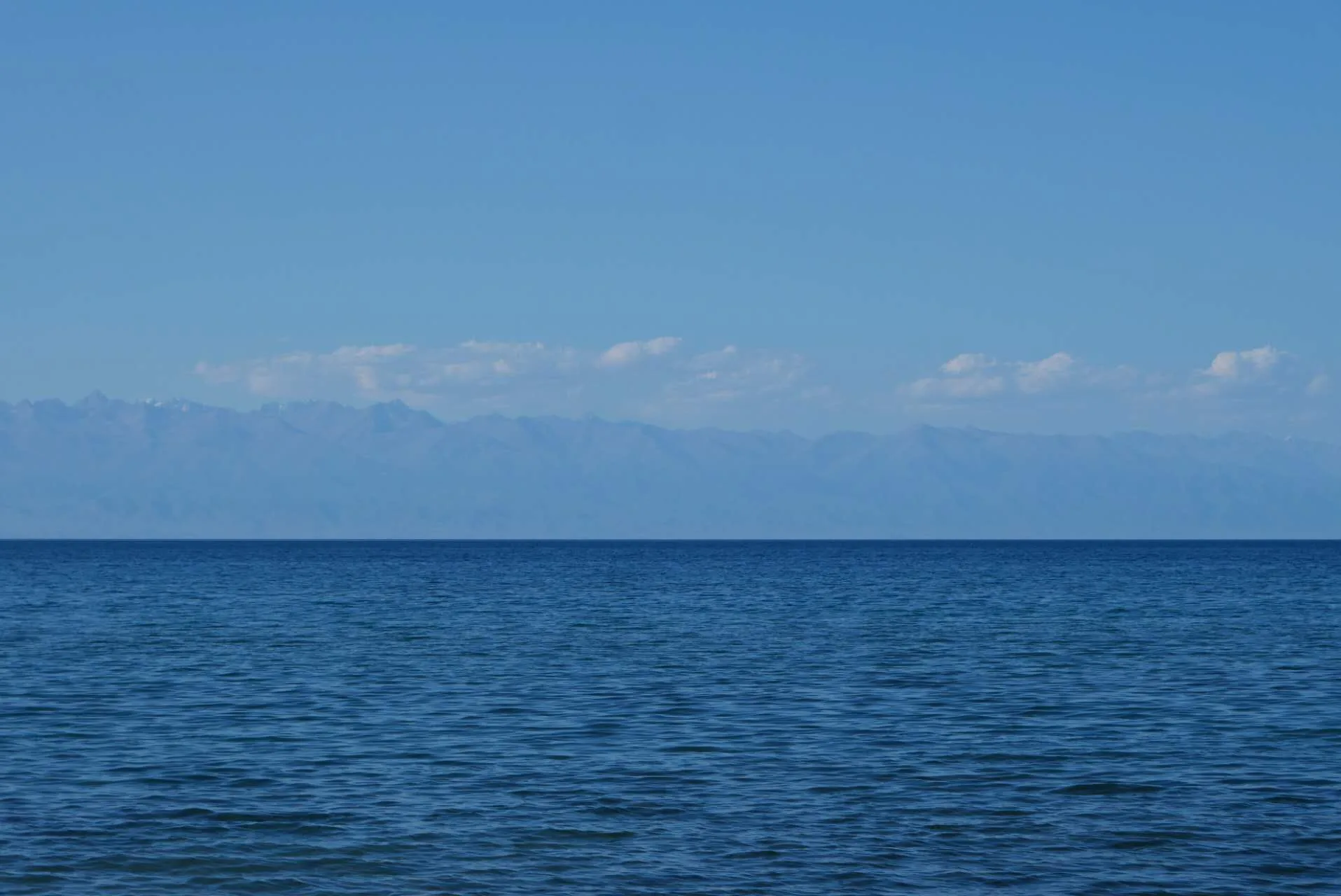
Many travellers head directly to Karakol for trekking, but the journey around Issyk-Kul deserves time of its own.
You can travel independently, stay in guesthouses, visit traditional eagle hunters, explore Skazka Canyon, relax on the beaches and even camp in suitable areas near the lake.
This guide explains how to explore Issyk-Kul on a budget, where to stay, how to get around and how to plan your route without relying entirely on organised tours.
Quick Facts
- Location
- Northeastern Kyrgyzstan
- Lake altitude
- Approximately 1,607–1,608 m
- Best months for a summer lake trip
- June–September
- Peak beach season
- July–August
- Suggested visit
- 3–7 days
- Main northern base
- Cholpon-Ata
- Main eastern base
- Karakol
- Useful southern base
- Bokonbayevo
- Western gateway
- Balykchy
- Getting around
- Marshrutkas, buses, shared taxis and private transfers
- Accommodation
- Guesthouses, hotels, hostels, yurts and camping where permitted
- Currency
- Kyrgyz som (KGS)
Transport schedules, attraction fees and seasonal accommodation can change. Confirm important details locally.
North Shore vs South Shore of Issyk-Kul
The two shores offer different types of travel experiences. Choosing the right side depends on whether you want convenient beaches, cultural experiences, remote scenery or a combination.
| Topic | North Shore | South Shore |
|---|---|---|
| Atmosphere | Busier and more developed | Quieter and more rural |
| Main bases | Cholpon-Ata, Bosteri | Bokonbayevo, Tamga, Kaji-Say |
| Beaches | More developed facilities | More natural and less developed |
| Accommodation | Hotels, resorts, guesthouses | Guesthouses, yurts, homestays |
| Public transport | Generally easier on main routes | More planning needed |
| Main highlights | Swimming, beaches, petroglyphs | Canyons, eagle hunting, villages |
| Best suited to | Relaxed beach holidays | Independent travel and exploration |
Neither shore is universally better.
If you want convenient swimming and accommodation choices, the north is often the simpler option.
If you prefer traditional villages, dramatic scenery and a quieter atmosphere, consider spending more time on the south.
With enough time, combining both shores offers a more complete experience of Issyk-Kul.
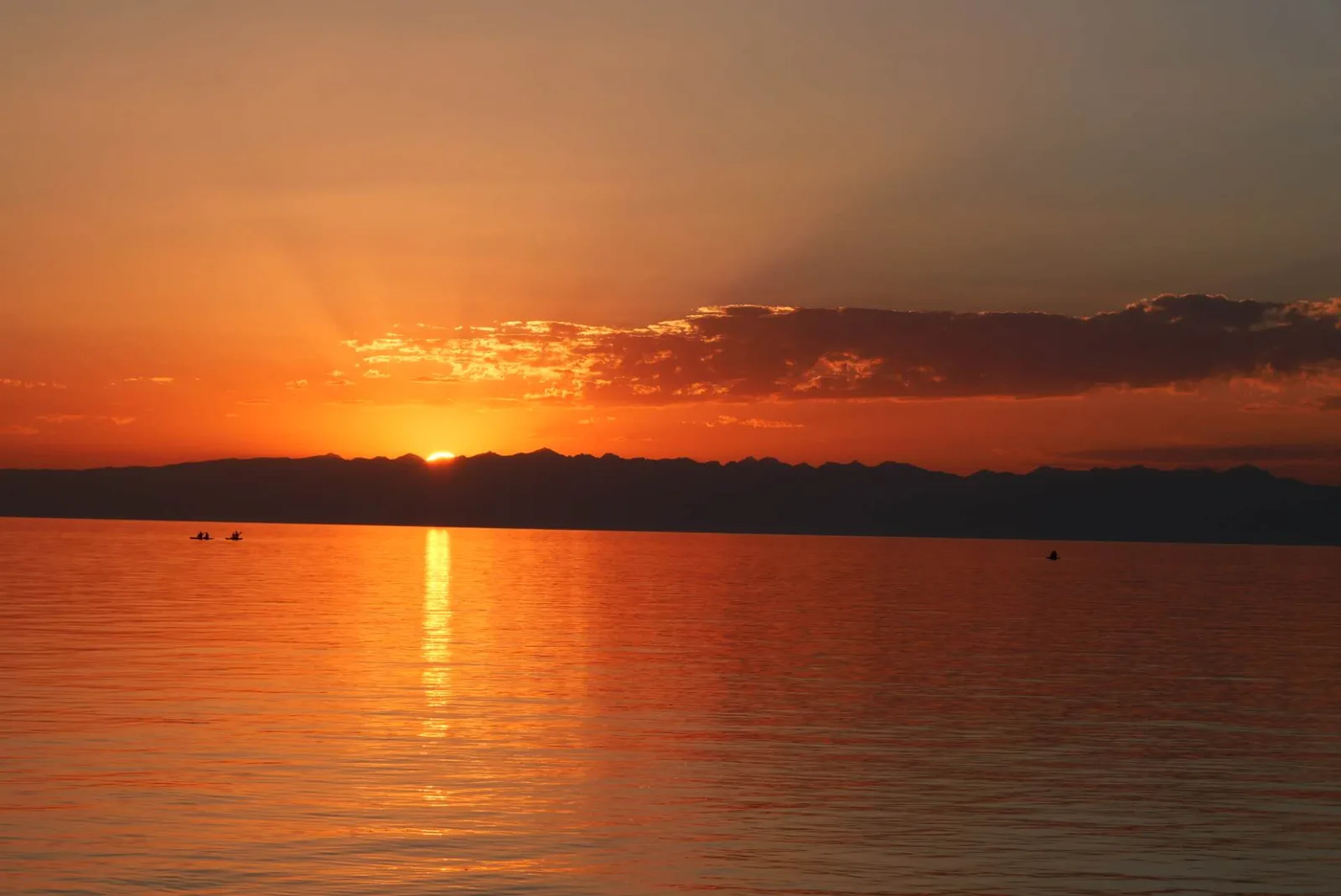
Best Places to Visit Around Issyk-Kul
Cholpon-Ata — Beaches and Relaxation
Cholpon-Ata is one of the best-known resort towns on Issyk-Kul's northern shore. It offers beaches, restaurants, guesthouses and relatively convenient transport connections. During the summer, the area attracts both domestic and international visitors.
The town is also known for its open-air petroglyph site. Cholpon-Ata is a practical base for travellers who want to enjoy the lake without constantly changing accommodation. See our Cholpon-Ata Practical Guide.
Karakol — Gateway to the Mountains
Karakol is one of the main towns in eastern Kyrgyzstan and an important base for trekking. It is particularly useful for visiting Ala-Kul Lake, Altyn Arashan, Jeti-Oguz and other mountain destinations.
The town offers guesthouses, hostels, markets and access to the surrounding valleys. Although many travellers associate Karakol with Issyk-Kul, most of its best-known outdoor attractions are in the mountains rather than on the lakeshore. See our Karakol Practical Guide.
Bokonbayevo — Eagle Hunting and Local Culture
Bokonbayevo is one of the most interesting bases on the southern shore. The area is known for traditional eagle hunting, guesthouses, yurt accommodation and access to quieter sections of the lake.
Visitors can arrange demonstrations with local eagle hunters, often through guesthouses or Community Based Tourism contacts. Booking in advance is advisable rather than assuming a demonstration is always available on arrival. Read more in our eagle hunting guide.
The town is also a practical base for exploring other south-shore attractions. See our Bokonbayevo practical guide.
Skazka Canyon — The Fairytale Canyon
Skazka Canyon is one of the most distinctive natural attractions on Issyk-Kul's southern shore, near Tosor. The landscape consists of colourful sandstone formations, narrow passages and eroded ridges, which change appearance throughout the day as the light moves across the rock.
Most visitors can explore the main accessible areas in approximately one to two hours, depending on their chosen route and photography stops. The terrain can be loose, steep or slippery after rain. Wear suitable footwear and avoid unstable edges.
The canyon is reached from the southern lakeshore road, but public transport normally does not take visitors directly to the main entrance. Confirm your return transport before visiting independently.
Kyzyl-Tuu — Traditional Yurt Making
Kyzyl-Tuu is a village on the southern shore known for traditional yurt craftsmanship. Local artisans make elements such as wooden frames and felt coverings.
Visitors interested in Kyrgyz culture can enquire about workshops or demonstrations through local accommodation providers and tourism organisations. Always confirm availability and ask permission before entering workshops or photographing people.
Barskoon Gorge — Waterfalls and Mountain Scenery
Barskoon Gorge is a mountain valley south of the lakeshore road, known for forests, waterfalls and mountain landscapes.
Reaching Barskoon village is different from reaching the waterfall trails further into the gorge. Travellers without a private vehicle may need additional transport from the main lakeshore road. Plan enough time for the journey and any walking.
Jeti-Oguz — Red Rocks and Valley Walks
Jeti-Oguz is famous for its red sandstone formations, including the Seven Bulls. The nearby valley also provides access to walking routes and mountain scenery.
Distinguish between transport to Jeti-Oguz village, the rock formations and trailheads deeper inside the valley. These are not necessarily the same drop-off location.
Balykchy — Western Gateway
Balykchy sits at the western end of Issyk-Kul and is an important transport connection. It is especially useful for travellers arriving from Bishkek or changing between northern and southern shore routes. Seasonal passenger trains have also operated between Bishkek and Balykchy.
How to Get to Issyk-Kul from Bishkek
Most independent travellers reach Issyk-Kul by road from Bishkek. The most convenient destination depends on which shore you plan to visit.
By Marshrutka or Bus
Marshrutkas and selected intercity buses connect Bishkek with destinations around Issyk-Kul.
According to official municipal information following station changes in 2024, services towards Issyk-Kul and Naryn operate from Bishkek Bus Station — 1/1 Alma-Atinskaya Street. Individual operators may use other pickup points, so confirm departure locations before travelling.
For route-specific details, see our Bishkek to Karakol transport guide.
By Shared Taxi
Shared taxis are another option for reaching towns around Issyk-Kul. Passengers generally pay for individual seats. Confirm the total fare, luggage charges, destination and departure arrangements before boarding.
Shared taxis can be useful when scheduled transport is unavailable, but they may wait until enough passengers have joined.
By Train
Seasonal passenger trains have operated between Bishkek-2 and Balykchy, including during the summer of 2026. This can be an alternative for travellers heading towards the western end of the lake.
However, a train to Balykchy does not take you directly to Cholpon-Ata or Karakol. You will need onward transport. Check current operating dates and ticket availability with Kyrgyz Railways.
By Car or Private Driver
Travelling by car provides more flexibility for the southern shore, where attractions may be spread out beyond public transport routes. Check current road conditions and any rental restrictions before setting off.
Not every attraction requires a 4x4, but conditions depend on the specific access road and weather.
Getting Around Issyk-Kul Without a Car
Travelling around Issyk-Kul without renting a car is possible, especially when moving between the main towns. However, getting to individual attractions may require more effort.
North-shore connections are generally easier to organise along the main road. On the south shore, marshrutkas and shared taxis connect some towns and villages, but departure points and frequencies can be less predictable.
You may need to combine a marshrutka with walking, a local taxi or transport arranged through your guesthouse.
The nearest village is not the attraction
A vehicle passing the nearest village does not necessarily reach the attraction itself. For example:
- • Skazka Canyon requires access beyond the main road.
- • Barskoon waterfalls are located deeper inside the gorge, not in Barskoon village.
- • Jeti-Oguz village, the red rock formations and valley trailheads are different locations.
- • Bokonbayevo is a useful base for arranging cultural activities, which may require transport to meet the organiser.
Always arrange an appropriate return journey.
For marshrutkas, shared taxis and bus stations across the country, see the Kyrgyzstan Public Transport Guide.
Where to Stay Around Issyk-Kul
Cholpon-Ata and the North Shore
A practical choice for travellers seeking beaches, guesthouses, hotels and summer activities.
Karakol
A good choice for combining Issyk-Kul with trekking, mountain valleys and longer outdoor activities.
Bokonbayevo and the South Shore
A useful option for travellers interested in traditional culture, eagle hunting, homestays and quieter lakeshore areas.
Tamga and Other Southern Villages
Smaller villages can suit travellers looking for a relaxed atmosphere.
Guesthouse and yurt-camp availability depends on the location and season. Confirm facilities and booking arrangements before travelling, particularly outside July and August.
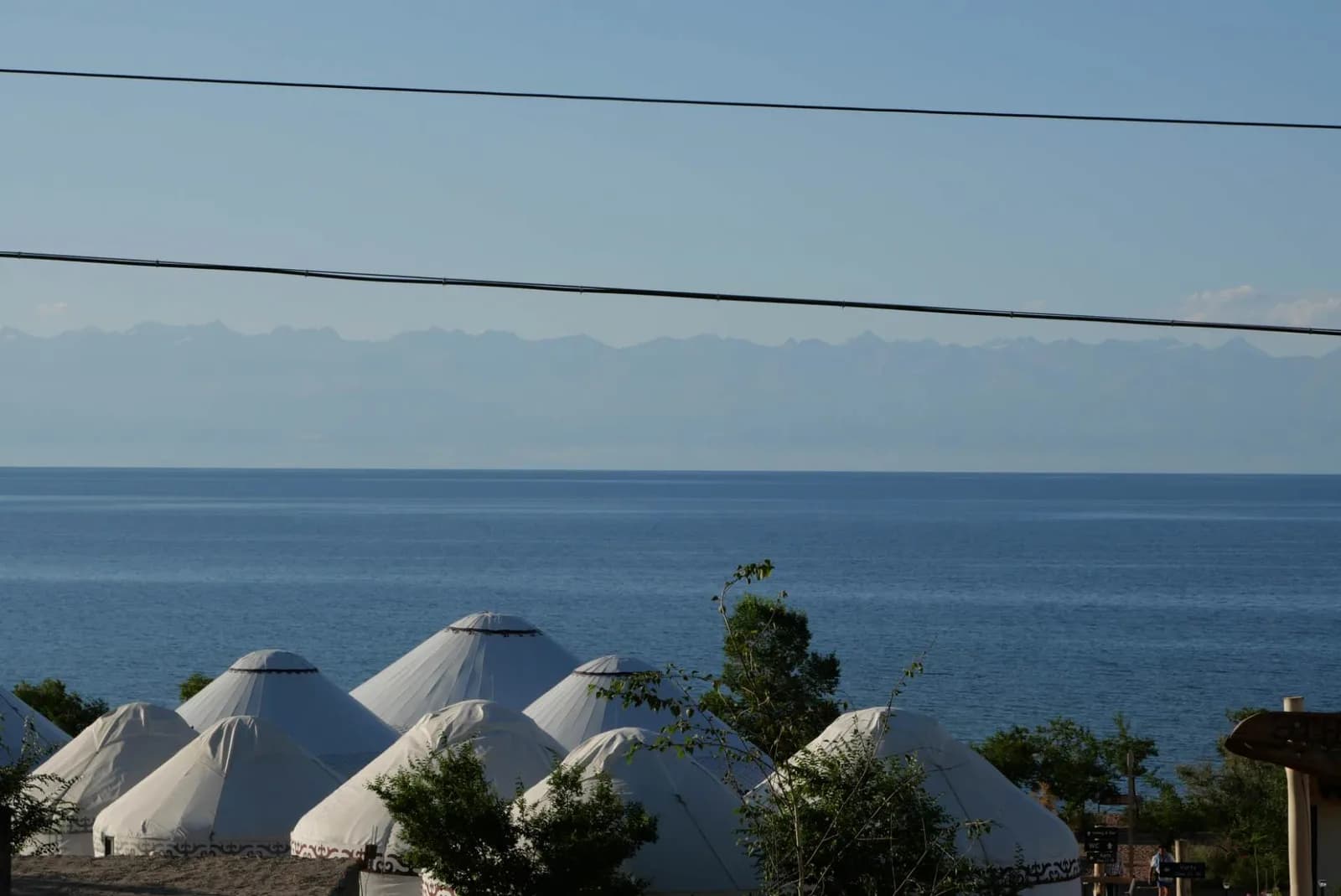
Camping Around Issyk-Kul
Camping can be an appealing way to experience the lakeshore. However, not every beach or open space is automatically an authorised campsite.
Parts of the surrounding region are environmentally protected — the lake and its surroundings form the Issyk-Kul Biosphere Reserve under UNESCO's Man and the Biosphere programme — and local land ownership, access and conservation rules may apply.
A managed campsite, guesthouse or yurt camp that allows tents can be a straightforward alternative. If planning an independent overnight stay, consider:
Do not enter abandoned buildings or private property to camp.
Personal Experience: Camping on the South Shore
Personal travel account
During my travels around Issyk-Kul, I camped near the southern shore between Bokonbayevo and the Skazka Canyon area.
I found a memorable lakeside spot near an abandoned structure, close to what I remember as an old Sayakbay Manaschy statue location.
There were other campers in the wider area, although walking further made it possible to find a quieter place.
It was one of the most memorable places I stayed around the lake.
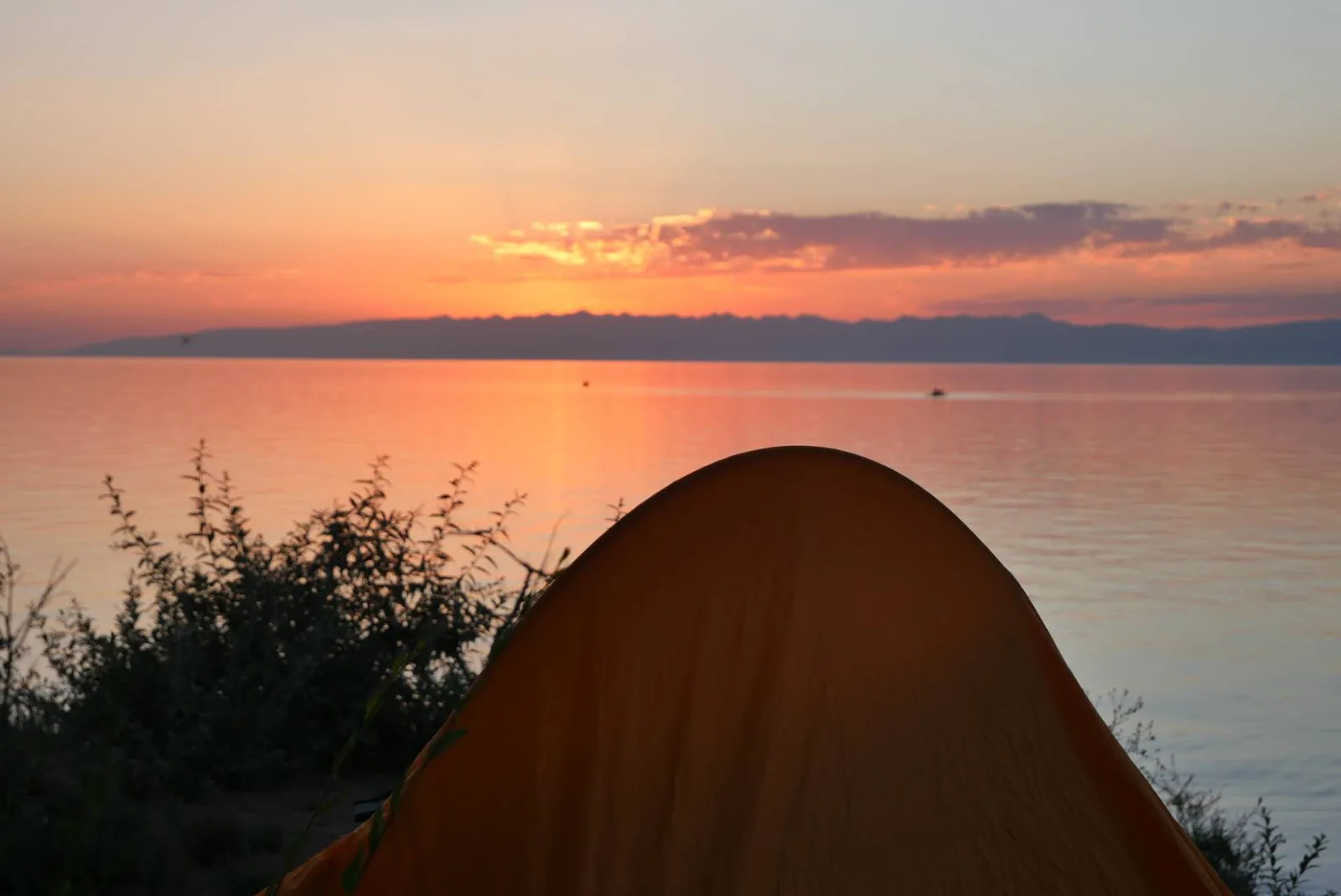
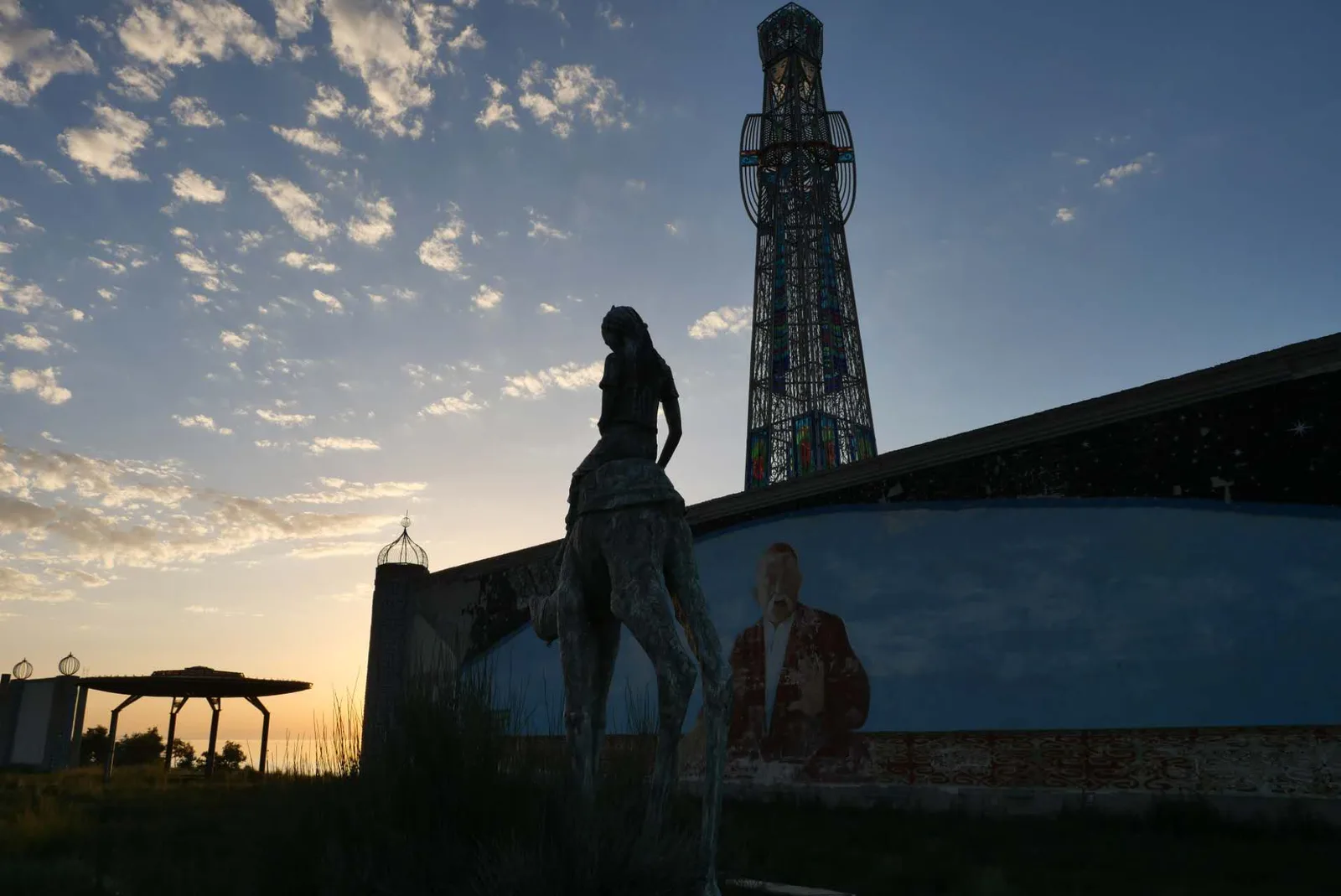
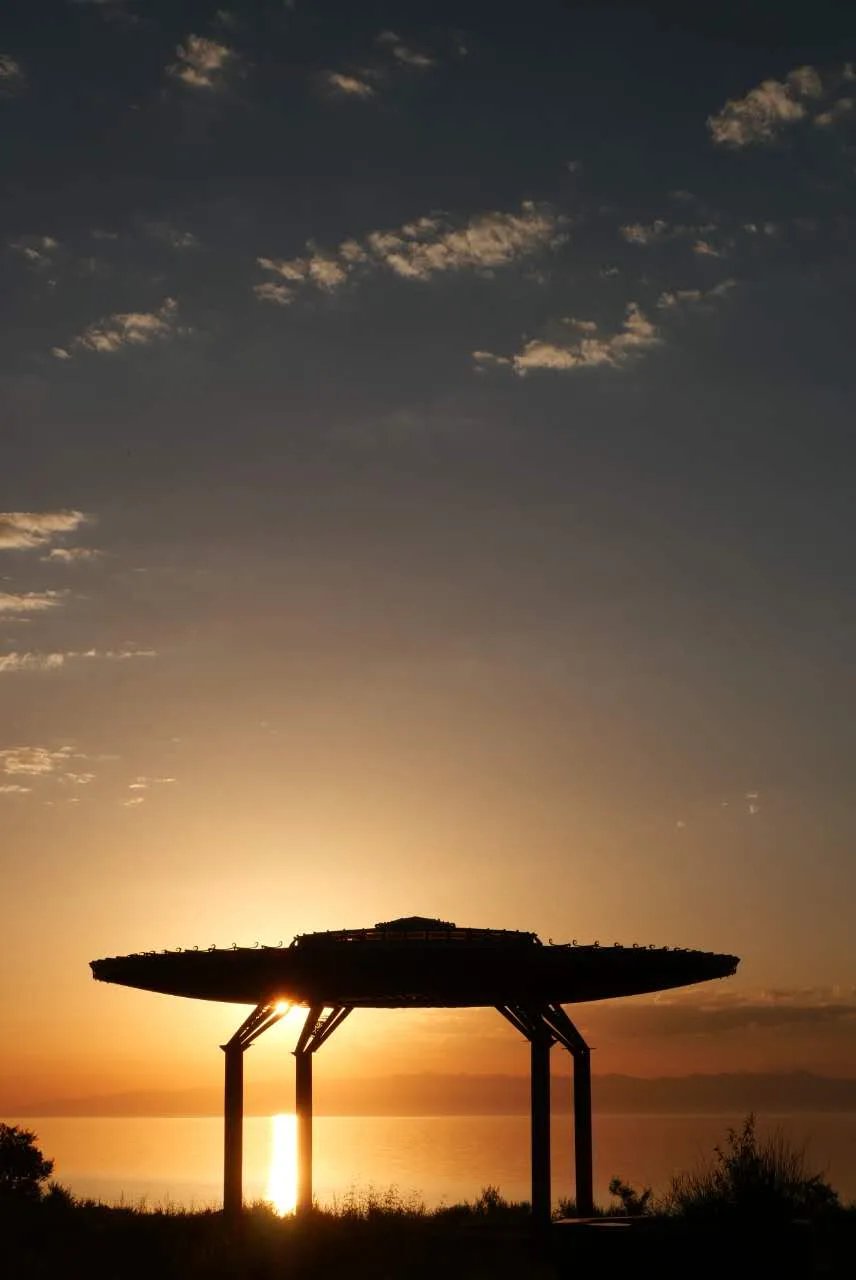
This was not an officially designated campsite. Check access, permission and conservation rules locally before camping.
Eagle Hunting and Local Culture
The southern shore of Issyk-Kul is an interesting place to learn about Kyrgyz traditions. Bokonbayevo is particularly associated with eagle hunting and the berkutchi tradition.
Travellers can enquire about demonstrations through local guesthouses or Community Based Tourism organisations such as CBT Bokonbaevo.
I stayed in a guesthouse in Bokonbayevo and attended an eagle hunting demonstration there.
A staged demonstration is not the same as a real hunt. Ask about the treatment of the birds, respect the handler's instructions and confirm what the activity includes.
If you are travelling on a budget, ask whether other travellers are interested in sharing the cost of a private demonstration. This is not guaranteed.
For more detail, read our Eagle Hunting in Kyrgyzstan guide.
Best Time to Visit Issyk-Kul
July and August are generally the busiest months for beach tourism. Summer brings more accommodation options and a greater range of seasonal activities.
June and September can also be pleasant, although temperatures and services are less predictable. Spring and autumn offer different landscapes and fewer summer crowds, but some accommodation and activities may be unavailable.
Conditions in the surrounding mountains can differ substantially from those at the lakeshore. Do not assume that high-altitude trekking passes are snow-free simply because Issyk-Kul is warm enough for a beach holiday.
Issyk-Kul Itineraries
These are flexible suggestions, not guaranteed public transport schedules.
3 Days — Southern Shore Focus
- Day 1: Travel from Bishkek to the Bokonbayevo area, settle into accommodation and spend time near the lake.
- Day 2: Arrange a local cultural experience, such as an eagle hunting demonstration, and explore nearby villages or the lakeshore.
- Day 3: Visit Skazka Canyon with confirmed transport, then return or continue east depending on your itinerary.
Arranging a vehicle or driver can make combining these activities easier.
5 Days — Explore Both Shores
- Day 1: Bishkek to Cholpon-Ata.
- Day 2: Explore the northern shore and continue towards Karakol.
- Day 3: Karakol and a nearby attraction such as Jeti-Oguz.
- Day 4: Travel west along the south shore, choosing one or two realistic stops rather than trying to see everything.
- Day 5: Bokonbayevo or Kyzyl-Tuu, followed by onward travel or an additional overnight stay.
Completing this route using only public transport may take longer than five days. Not all of these places are connected by direct scheduled marshrutkas.
7 Days or More — Lake and Mountains
Use the additional days to slow down, stay longer on either shore or include trekking from Karakol. For multi-day treks such as the Ala-Kul Lake trek, allocate the required trekking days separately. The Altyn Arashan guide covers a shorter mountain option, and Start Planning Kyrgyzstan helps fit Issyk-Kul into a longer route.
Budget Tips for Issyk-Kul
Issyk-Kul can be explored on a modest budget, but total costs depend on accommodation, transport and activities. Ways to manage expenses:
- • Use marshrutkas or shared taxis between main towns.
- • Stay in guesthouses or hostels.
- • Ask about shared transfers to attractions.
- • Confirm transport prices before boarding.
- • Ask about luggage charges.
- • Carry cash in Kyrgyz som.
- • Confirm whether demonstrations are priced per person or per group.
- • Avoid depending on a single late-afternoon marshrutka.
- • Confirm facilities and prices before arriving at seasonal camps.
For example prices, see Kyrgyzstan travel costs. ⚑ Information outdated? Report an update
Frequently Asked Questions
Is Issyk-Kul worth visiting?
Yes, particularly if you want to combine beaches, mountain scenery, Kyrgyz culture and independent travel.
Is the north or south shore better?
The north is generally more developed and convenient for beach holidays. The south suits travellers interested in quieter landscapes, local culture and more independent exploration.
Can you travel around Issyk-Kul without a car?
Yes, between many main towns. Reaching specific canyons, gorges and beaches may require local transport, walking or arranged transfers.
Where should backpackers stay?
Cholpon-Ata is convenient for northern beaches, Karakol for trekking, and Bokonbayevo for southern-shore culture and independent exploration.
Can you camp around Issyk-Kul?
Camping is possible in suitable places, but access, permission and conservation restrictions must be checked locally.
How do you get to Skazka Canyon?
Travel along the southern lakeshore road towards the Tosor area, then arrange access to the canyon entrance. Do not assume public transport reaches the entrance directly.
Where can you see eagle hunting?
Bokonbayevo is a well-known base for arranging traditional eagle hunting demonstrations through local organisers and accommodation providers.
Is there a train to Issyk-Kul?
Seasonal trains have connected Bishkek with Balykchy. Current schedules should be confirmed with Kyrgyz Railways.
Related guides
Cholpon-Ata Practical Guide
Beaches, guesthouses, WiFi and onward travel on the north shore.
Karakol Practical Guide
Transport, costs, food and trekking planning from Karakol.
Eagle Hunting in Kyrgyzstan
Responsible demonstrations and Issyk-Kul route planning.
Bishkek to Karakol Transport Guide
Marshrutkas, buses and shared taxis along the lake.
Kyrgyzstan Public Transport Guide
Marshrutkas, shared taxis, bus stations and routes.
Ala-Kul Lake Trek Guide
A multi-day trek from Karakol Valley to Altyn Arashan.
Sources & Last Reviewed
Last researched: October 2026. Official sources are marked as such; forum links are traveller reports, not official fares or timetables. Personal notes are the author's own experience.
- Bishkek City Hall — Bus station changes (official)
- Kyrgyzstan Ministry of Transport — Station reorganisation (official)
- Kyrgyz Railways — Tickets and schedules (official)
- UNESCO — Issyk-Kul Biosphere Reserve
- CBT Bokonbaevo
- Destination Jeti-Oguz — Barskoon Waterfall
- Kyzyl-Tuu yurt making
- Caravanistan — Issyk-Kul regional guide
- Caravanistan forum — South shore transport (traveller reports, 2026)
- Caravanistan forum — South shore updates (traveller reports)
Community updates
Questions & travel updates
Ask questions, share recent experiences, or help the next traveller. Updates about prices, transport schedules, trail conditions, and border crossings are especially valuable.
All contributions are reviewed before appearing · Google sign-in required to post · Your email is never published
No discussions yet. Have you visited recently, or is there something this guide has not answered? Start the conversation below.
Earlier traveller reports
Traveller reports for this guide
These reports are submitted by travellers and manually reviewed before publishing. They are not official advice. Always verify current rules before travelling.
No traveller reports published yet. If you used this route recently, you can submit a short update below.