
Kyrgyzstan
Karakol Valley, Ala-Kul Pass and Altyn Arashan
Ala-Kul Lake Trek Guide: Karakol to Altyn Arashan Without a Guide
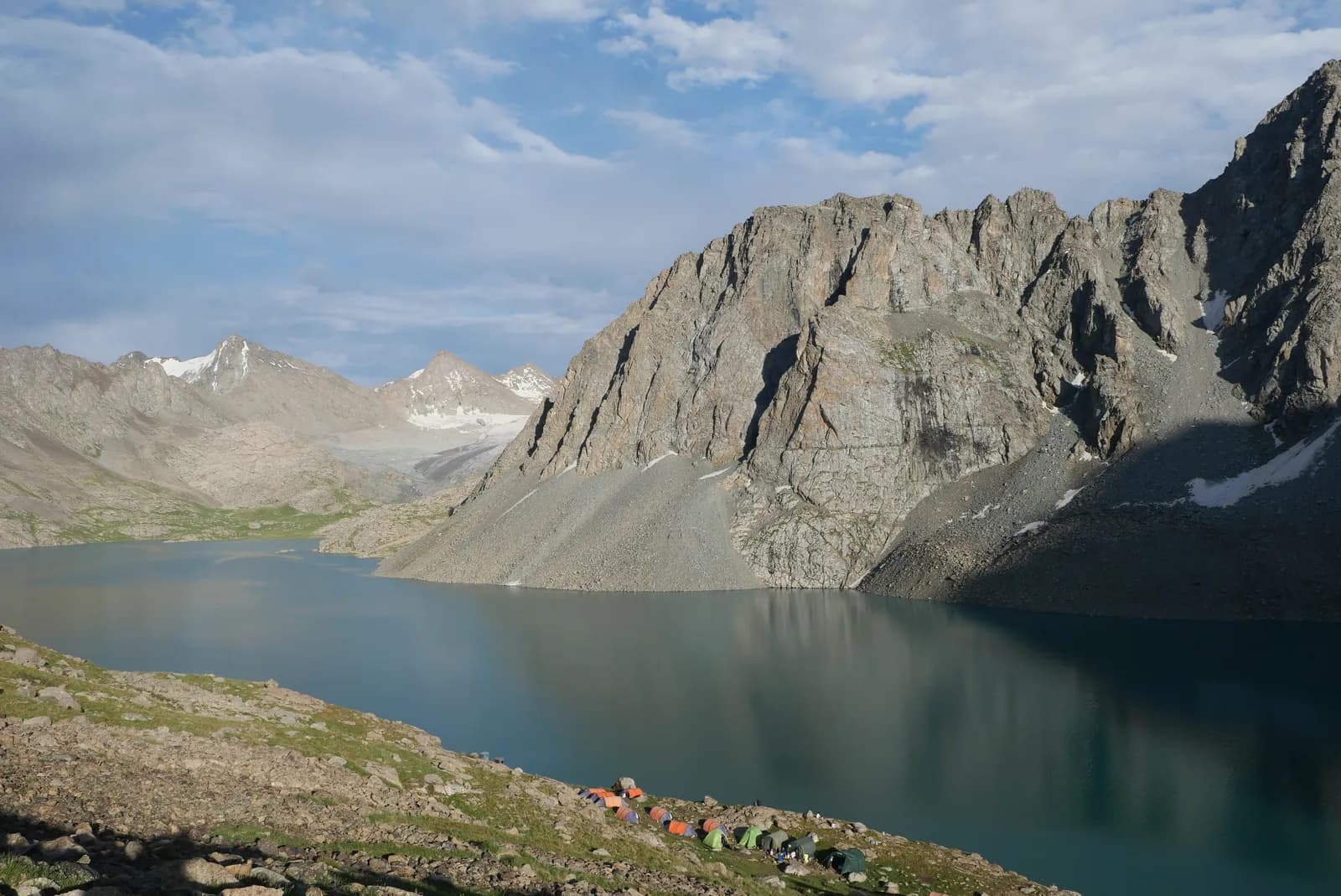
Ala-Kul Lake and Ala-Kul Pass form one of the most famous treks near Karakol. The classic route links Karakol Valley, the lake, the pass and Altyn Arashan. I found it possible to hike without a guide, but only with good fitness, preparation and confidence on mountain trails. It is popular and usually busy in season—not a remote expedition—but it is still physically demanding.
Last updated: August 2026
Personally travelled: July 2026
Trail conditions, snow, weather, marshrutkas, yurts, food and prices change. Check locally in Karakol before leaving and never depend on seasonal services being open.
Quick facts
- Start
- Karakol / Karakol Valley trailhead
- Finish
- Altyn Arashan, or Karakol after hiking or riding out
- Typical duration
- 3 nights / 4 days; extend it with more food and rest days
- Difficulty
- Hard, but doable for people with good fitness
- Guide needed
- No, not usually, if experienced and prepared
- Sleeping
- Camping throughout; seasonal yurts at some points
- Best season
- Summer to early autumn, depending on snow and weather
- Must-have
- Rain jacket or poncho, warm layer, offline maps and enough food
Getting to the trailhead from Karakol
The ideal budget option is a marshrutka toward the beginning of the trek and Karakol Valley trailhead. The national park entrance and payment point is near the start. Routes, stops and prices change, so ask your accommodation or check the latest details in Karakol. A taxi is practical when sharing with a group or carrying heavy gear.
Prepare in town using the Karakol practical guide, Kyrgyzstan checklist and travel cost guide.
Day 1: Karakol trailhead to 2nd Bridge
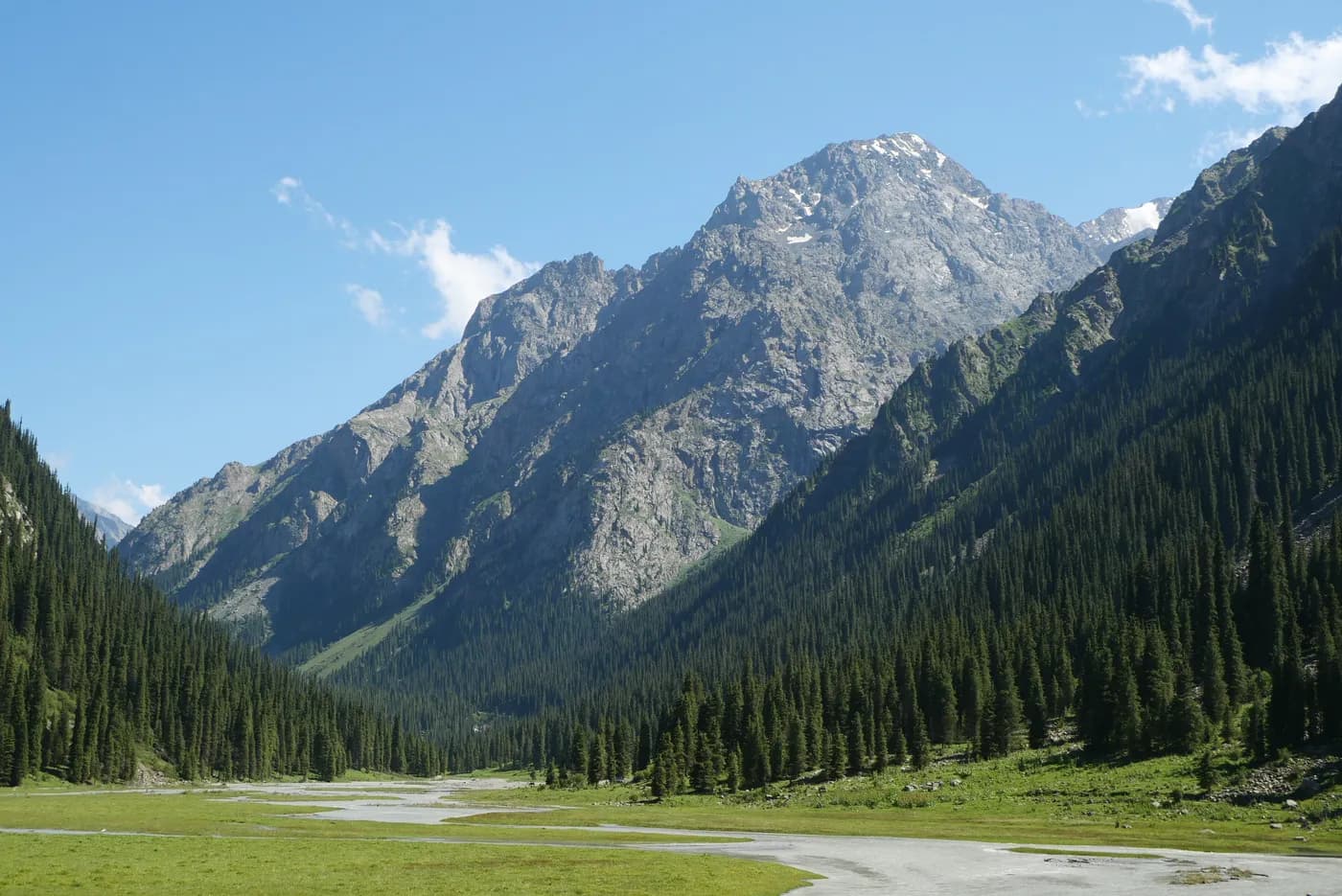
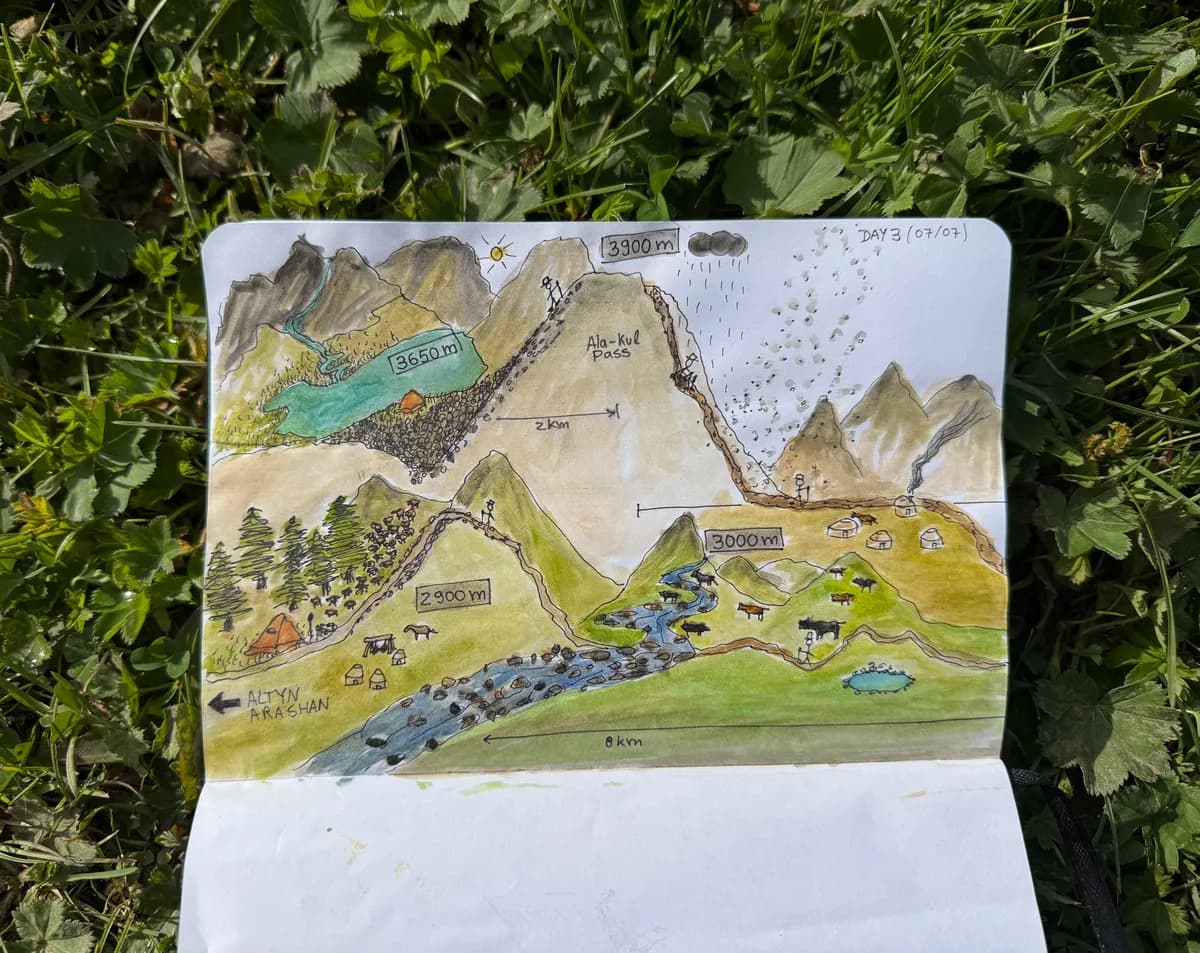
Start at the national park payment area and follow the valley. It is a useful warm-up before the steeper days. The 2nd Bridge area is the ideal first night and many hikers camp there. Seasonal yurts or food may be nearby, but do not assume they will be operating.
Day 2: 2nd Bridge to Sirota Camp and Ala-Kul Lake
This day is mostly uphill and gets progressively harder. Sirota Camp is a major rest point; food, beds and even Starlink internet may appear there in season, but availability changes. Some hikers stop overnight. If strength, daylight and weather allow, continuing to Ala-Kul Lake sets up the next day well.
Camping near the lake is common, and seasonal yurts or food may be available. Nights here can be bitterly cold even in summer, so bring a properly rated sleep system and warm layers.
Day 3: Ala-Kul Lake and pass to Altyn Arashan
The morning starts with another climb. Ala-Kul Pass is the route’s highest, hardest section; the descent is loose, long and tiring. A few yurts may operate beyond the descent, but options are limited. The remaining walk toward Altyn Arashan can consume most of the day.
Do not underestimate Ala-Kul Pass
Day 4: Altyn Arashan to Karakol
Altyn Arashan feels like the reward: rest, eat, use the hot springs or stay another night. From there, hike out, hire a horse, or take a rugged 4x4/van. Hiking is cheapest but long after three demanding days. A horse may mean paying for both horse and guide—my reported note was roughly €60–80 for two people. A shared van or 4x4 may be roughly €15–25, depending on negotiation and group size. Treat these only as changing local reference points.
Plan the finish with the full Altyn Arashan hot springs guide.
Camping, yurts and food
Budget travellers can carry a tent and camp the whole route—the cheapest and most flexible option. Seasonal yurts and meals may appear around 2nd Bridge, Sirota Camp, Ala-Kul Lake and Altyn Arashan. They can be closed, full or absent, so carry enough food and never make them essential to your safety.
Weather and essential gear
Mountain weather changes quickly and rain is always possible. A poncho or rain jacket is essential. Check the forecast for the full four days, then reassess locally before starting. Carry warm layers, headlamp, power bank, offline maps, sufficient food, water treatment where needed and proper hiking shoes. Nights beside Ala-Kul can be cold even in summer.
Do you need a guide?
Most experienced, prepared independent hikers do not. The trail is popular and busy in season, but offline maps remain essential. A guide is sensible for beginners, uncertain conditions, or anyone wanting navigation and logistics handled. Hiking without a guide means accepting responsibility for weather, altitude and route decisions.
Budget tips
- Use a marshrutka or shared taxi from Karakol.
- Camp and carry your own food.
- Share horse or vehicle costs from Altyn Arashan if you do not hike out.
- Carry cash in Kyrgyz som; mountain services may not accept cards.
FAQ
How many days do you need for the Ala-Kul trek?
Three nights and four days is a comfortable classic schedule from Karakol Valley through Ala-Kul Pass to Altyn Arashan. Carry more food if you want rest or weather-buffer days.
Can you hike Ala-Kul without a guide?
Yes. Fit, prepared hikers comfortable in mountain terrain commonly hike it independently in season. Check current conditions and carry offline maps; beginners may prefer a guide.
How hard is the Ala-Kul Lake trek?
Hard but doable with good fitness. Long climbs, a high pass, altitude, cold nights, changeable weather and a heavy camping pack make it demanding.
Where can you camp on the Ala-Kul trek?
Common areas include the 2nd Bridge, Sirota Camp, near Ala-Kul Lake and around Altyn Arashan. Choose safe, durable ground and respect yurt camps and livestock routes.
Can you get food on the Ala-Kul trek?
Food may be sold at seasonal yurts around the 2nd Bridge, Sirota Camp, Ala-Kul Lake and Altyn Arashan, but never depend on it. Carry enough food for the route.
How do you get back to Karakol from Altyn Arashan?
Hike out toward Ak-Suu and continue by local transport, or arrange a horse or rugged 4x4/van. Confirm current prices locally and share costs where possible.
Is Ala-Kul worth it?
Yes if you enjoy challenging multi-day mountain hikes. The lake, pass and finish at Altyn Arashan are memorable, but the route is not an easy sightseeing walk.
Continue planning around Karakol
Use the destination hub for the wider country, or plan the hot-spring finish before committing to the trek.
From the travelling community
Questions & travel updates
Ask about this guide, share a recent experience or help another traveller. Updates are personal reports; the guide’s last-reviewed date changes only when its content is reviewed.
Newest contributions first · Public reading · Reviewed contributions
No discussions yet. Have you visited recently, or is there something this guide has not answered? Start the conversation below.