

The quick plan
| Decision | Short answer |
|---|---|
| How long? | Two full days for the central city; three for a slower pace; add a separate day for Wulong or Dazu. |
| Where to stay? | Central Yuzhong (Jiefangbei / Jiaochangkou) for a first visit; Guanyinqiao for shopping and nightlife. |
| What to see first? | Hongyadong from outside at night, the layered streets around Jiefangbei, and the river confluence. |
| What to set up before arriving? | Payment, maps and ride-hailing apps, plus mobile data. |
Understand Chongqing before you plan
The city and the municipality are not the same place. Chongqing Municipality covers about 82,400 km², far more than the compact central area most visitors mean. Wulong, about 129 km from the city, and Dazu are separate excursions, not stops between downtown sights.
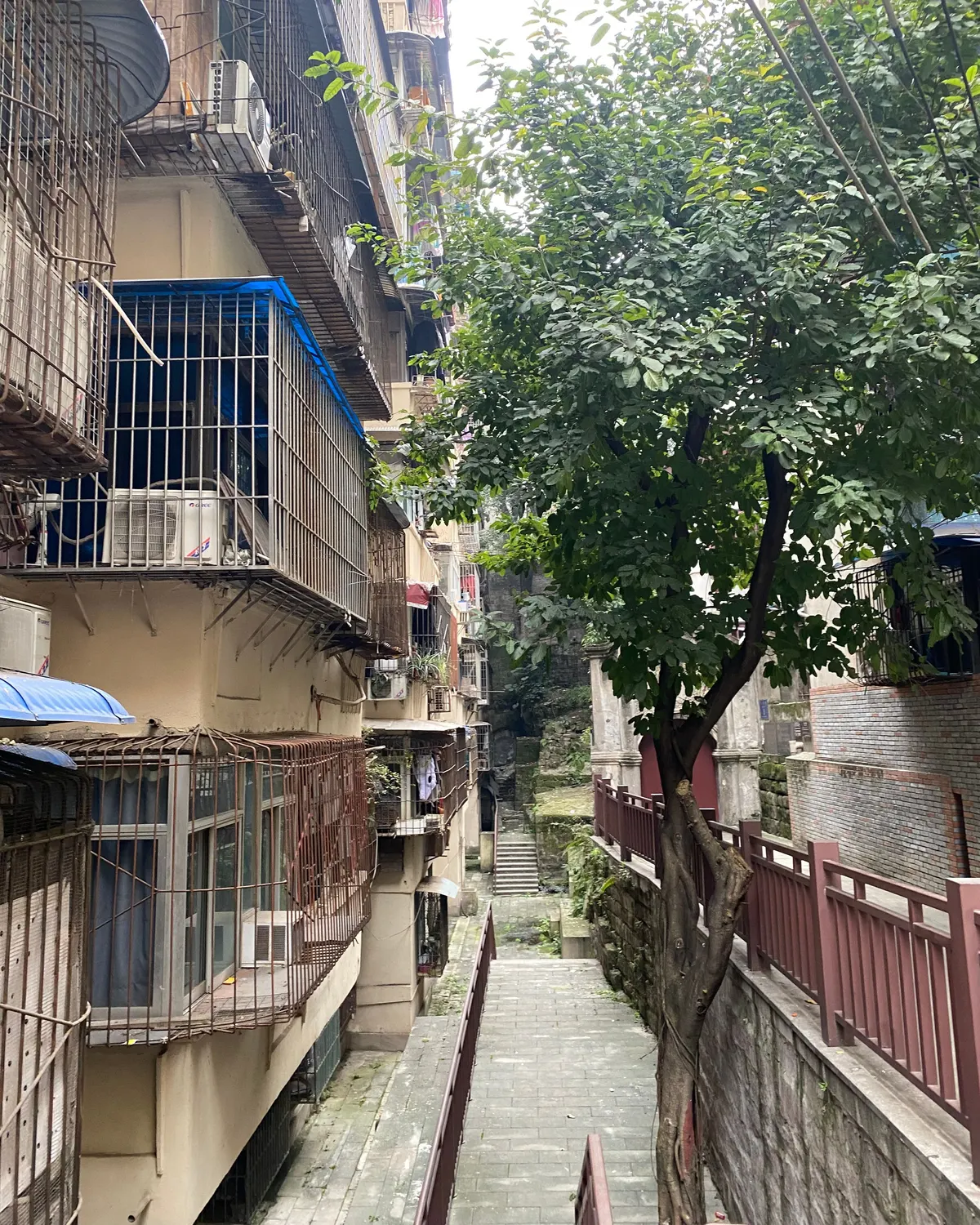
Central Chongqing is built in layers. The Yuzhong peninsula sits between the Yangtze and Jialing rivers, and its streets are stacked: Shibati and Mountain City Alley link upper and lower parts of the centre, and Kuixing Tower's plaza looks like street level while standing 22 floors up. A place that looks close on a map can still mean stairs, a lift or a different exit.
How many days do you need?
Two full days cover central Yuzhong, the night views and one or two of Liziba, the museum or the cableway. Three days lets you add Ciqikou and slow down. Add a separate day for each excursion. Arrival and departure days are not full sightseeing days. The Chongqing itinerary gives the order.
Spring and autumn are the more comfortable seasons; summer in the central city is often very hot and humid. That is a general climate pattern, not a forecast for your dates.
What to see and do
- Things to do: Hongyadong, Jiefangbei, Kuixing Tower, Raffles City, Liziba, the cableway, the museum and Ciqikou, grouped so you don't zigzag across the city.
- Chongqing at night: Hongyadong from outside, a skyline dinner, the cableway or a short Two Rivers cruise.
- What to eat: hotpot, xiaomian noodles, chili chicken and BBQ, and how to order the spice level you want.
Where to base yourself
For a first visit, central Yuzhong around Jiefangbei and Jiaochangkou keeps the main sights close. Guanyinqiao, across the Jialing, suits a shopping and nightlife focus, and selected Nanbin Road hotels give skyline views at the cost of a river crossing. The where-to-stay guide compares the areas and includes the hostel I stayed at.
Once you have an area, you can compare Chongqing hotels on Trip.com (This is an affiliate link. Zantrail may earn a commission if you book through it.) It is a citywide search, so check each property's exact location.
Food and the city after dark
Chongqing is known for hotpot, xiaomian noodles and night-market BBQ, much of it spicy. The skyline is at its best after dark, from the Hongyadong riverfront or from across the river. The food guide and night guide cover both.
Getting in and around
Flights arrive at Jiangbei International Airport (T2 or T3). By train, check the exact station on your ticket: Chongqing North, West and East are different places, and East only opened in 2025. In the city, the metro and monorail handle longer journeys, walking works for short level-checked hops, and DiDi helps with luggage and late nights. See getting around Chongqing.
Beyond the city
- Wulong Karst: Three Natural Bridges and the karst landscape, a full day by train and transfer bus.
- Dazu Rock Carvings: the cliff carvings at Baodingshan and Beishan, a full culture day.
- Chongqing to Chengdu: which station pair to choose and the budget coach.
- Chongqing to Zhangjiajie: the direct train to Zhangjiajie West and the transfer to your base.
Before travelling, set up the essentials covered in the payments, train booking and local phone number guides.
Frequently Asked Questions
How many days do you need in Chongqing?
Do I need a car in Chongqing?
Can I visit Wulong or Dazu after a morning in the city?
Do I need a visa for Chongqing?
Related guides
China travel guides
Destinations, routes and trip essentials for China.
Essential Apps for Travelling in China
The seven apps I actually used in China: Alipay, WeChat, Amap, Trip.com, DiDi, Meituan and Dianping, and what to set up before arrival.
Trip.com Free eSIM for China
How I got a free data-only eSIM through Trip.com Platinum rewards, how to set it up and what it does not replace.
How to Book Train Tickets in China
Booking China trains with a foreign passport on Trip.com or 12306: stations, ticket release, fees, boarding and changes.
How to Pay in China: Alipay, WeChat Pay and Foreign Cards
Setting up Alipay and WeChat Pay with a foreign card, paying by QR code, the fee above ¥200 and personal-transfer limits.
Best Map App for China: Amap
The map app I used in China: setting up Amap (Gaode Maps) in English, finding the right place and planning walks and transit.
How to Use DiDi in China
Registering and booking rides in the DiDi app as a foreign visitor: pickup points, plates, payment and the phone-number check.
How to Get a Chinese Phone Number as a Visitor
Getting a Chinese SIM with your passport at an operator store, what to ask, and why a +86 number helps with apps like Meituan.
Sources & Last Reviewed
Last reviewed: November 2026. First-person notes describe my own use; everything else comes from the sources below and can change. Check the app or booking screen in front of you before relying on a detail.
- Chongqing government: geography of the municipality
- Chongqing government: Hongyadong
- Chongqing government: Kuixing Tower and its 22-floor plaza
- CapitaLand: Raffles City Chongqing, The Crystal and Skywalk
- Chongqing government: Wulong Karst, about 129 km from the city
- UNESCO: Dazu Rock Carvings
- Chongqing government: Chongqing East Railway Station
- China Meteorological Administration: Chongqing climate
- National Immigration Administration: current entry policies